When anchoring on the Columbia I always use my Anchor Buddy. The Anchor Buddy is a $25 thingy invented in Oregon (by the way) that works like a giant bungee cord to keep your boat out in deep water and keep it from being beached by tides, yacht and ship wakes and the wind. Here is a little tutorial on using an Anchor buddy.
I start with a Danforth like this Fortress and then shackle it to at least 3 feet of chain. Connect one end of the Anchor Buddy (the blue ropes) to your anchor chain. I like connecting two Anchor Buddies in "series" to keep my boat further out. Now attach 150 to 200 feet of 3/8" or 5/16" nylon rope to the other end of the Anchor Buddy, and finally buy a helix anchor, or some other form of ground anchor and attach that to the end of the rope.
Now, as you get within, say 50-100 feet from shore chuck your anchor into the drink. Slowly motor to shore, being sure that the Anchor Buddy and rope don't get sucked into the prop. When you get to shore, toss the rest of the rope and your ground anchor on the beach.
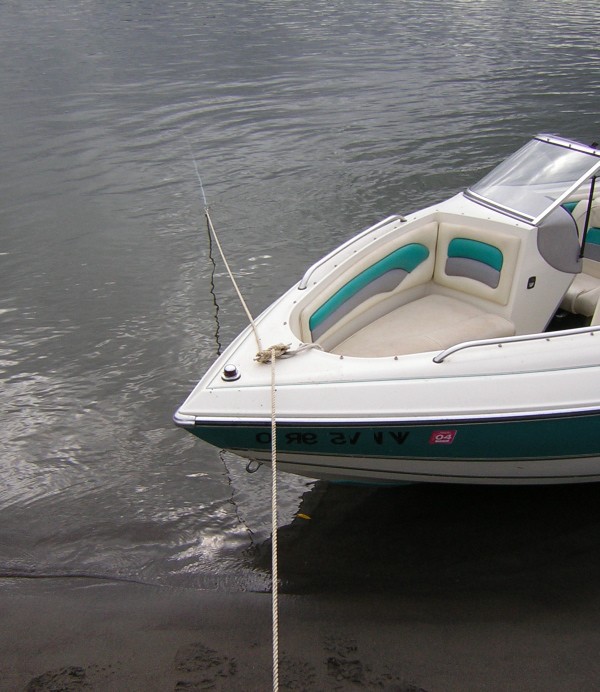
Now, grab the rope and start pulling on the part that goes out to the anchor, pull it in as tight as you can, then attach it to the bow cleat with several half hitches.
It should now look like this.
Note that in order to take this picture I had to have my foot firmly planted on the rope to the Stingray, 'cause the Anchor Buddies were pulling pretty hard.
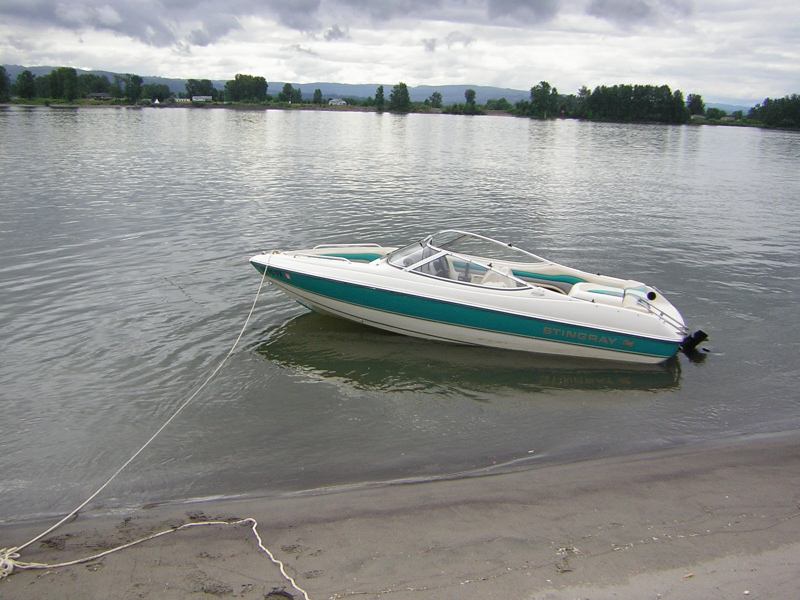
Now just let go, the Anchor Buddy (or buddies) will pull the boat out into the deeper water.
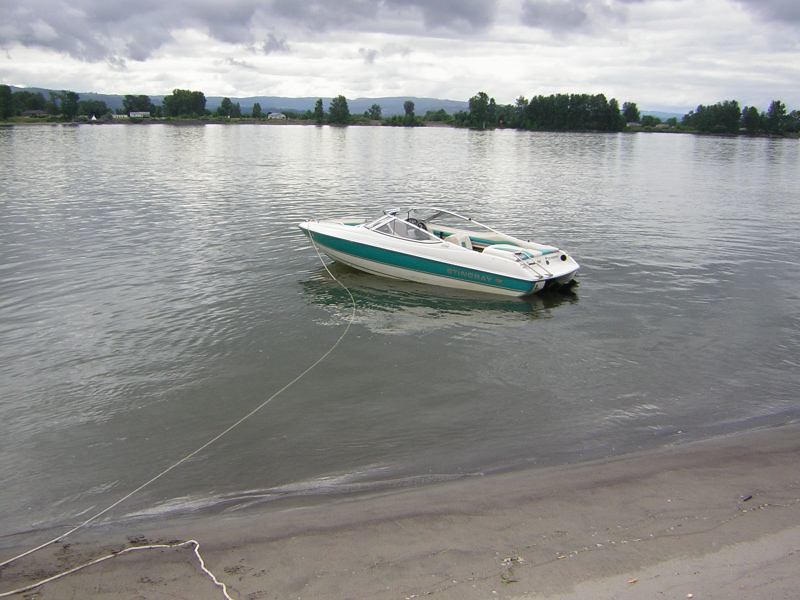
The boat will try to go all the way out to where the anchor is.
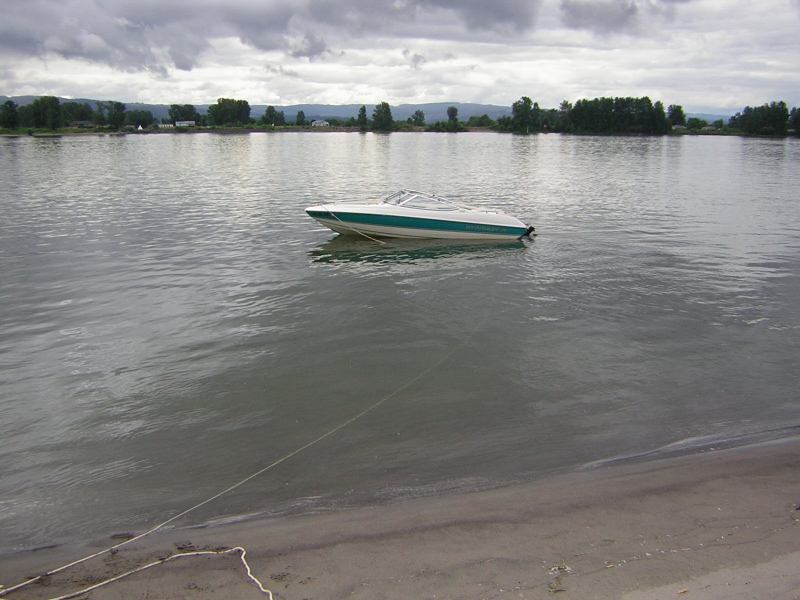
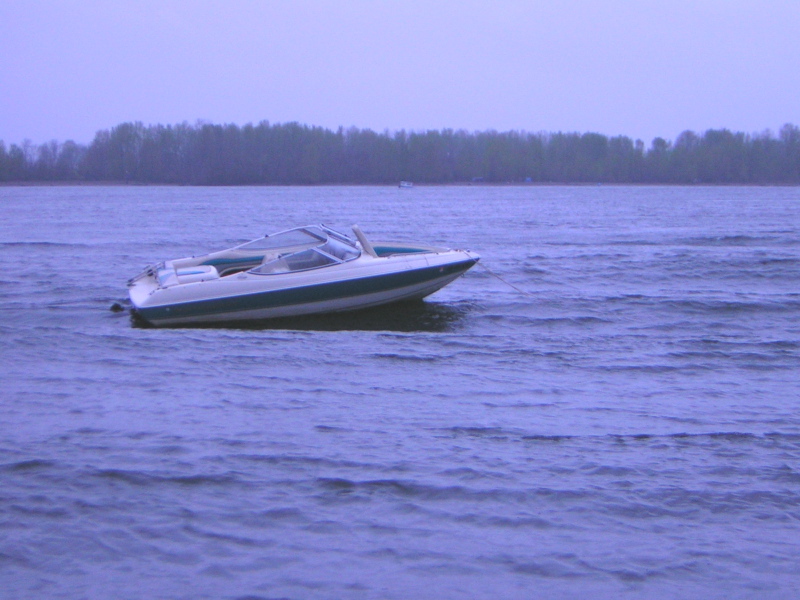
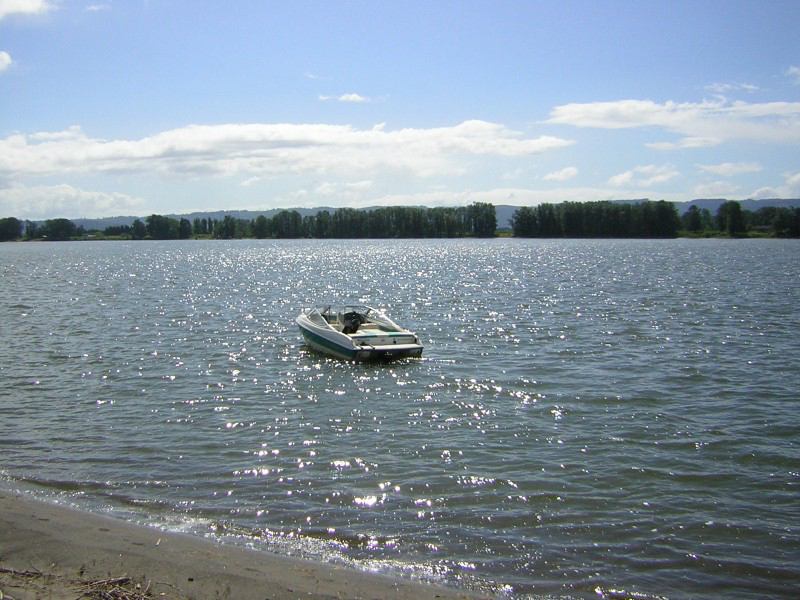
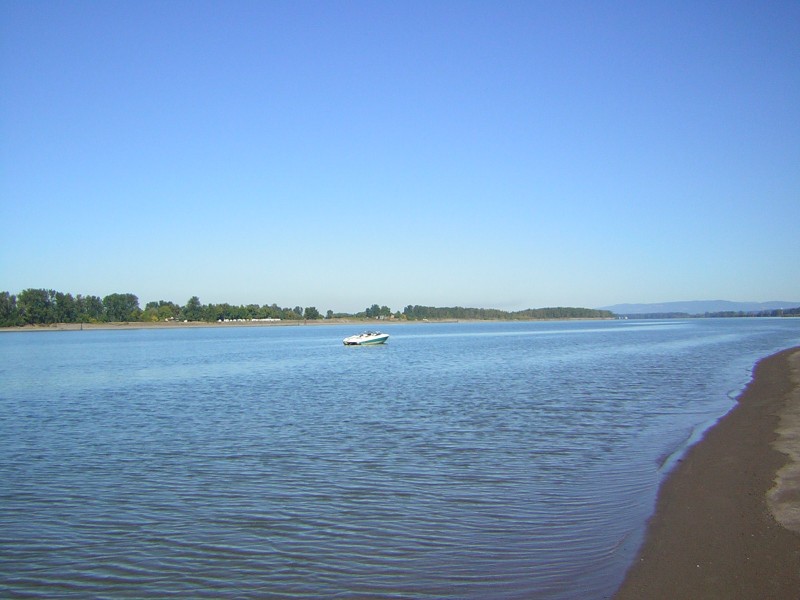
Finally the boat will be way out there, tracking the current and not hardly even pulling on the anchor or the line to shore.
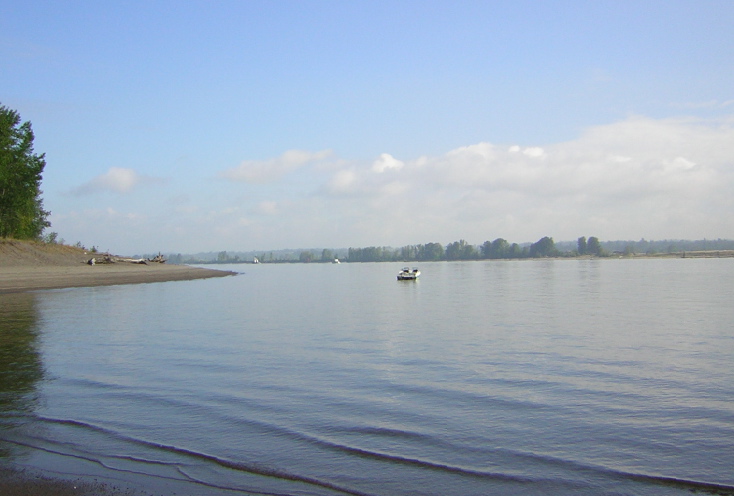
From a different perspective you can see how far out the Stingray actually is. It's in about 8 feet of water.
Here is a great shot I captured from space (last time I was up there), this is the Stingray anchored just South of Pier 1 at Caterpillar Island on the Anchor Buddy.
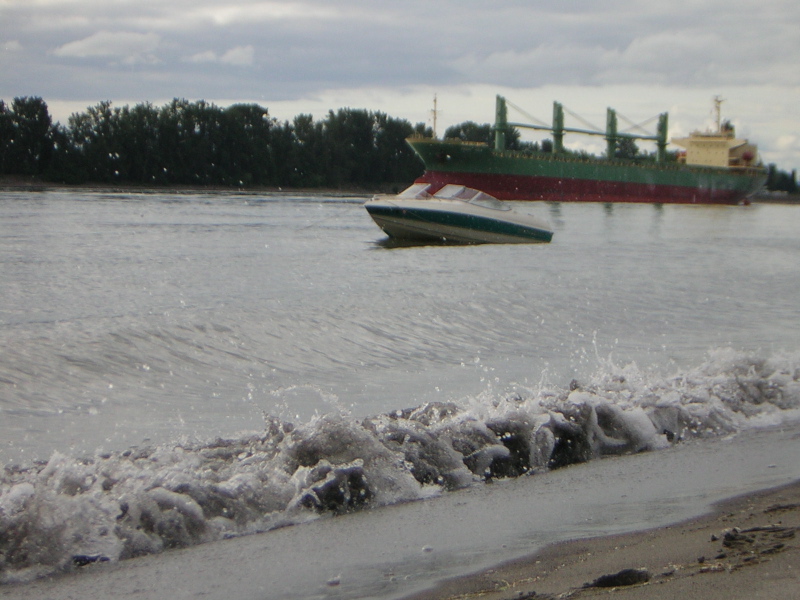
Now if a ship wake comes in the boat will be out in deep water where nothing can hurt it. If the tide changes or the wind comes up, the boat will swing around the other way and everything will be fine. In this picture you can see what I am protecting the Stingray from, here are some large waves that came in from a passing yacht. These are nothing compared to what some of the ships put out, but it gives you an idea of what I'm up against.
Here the Stingray is bouncing around in some really big stuff from a passing tug pushing barges.
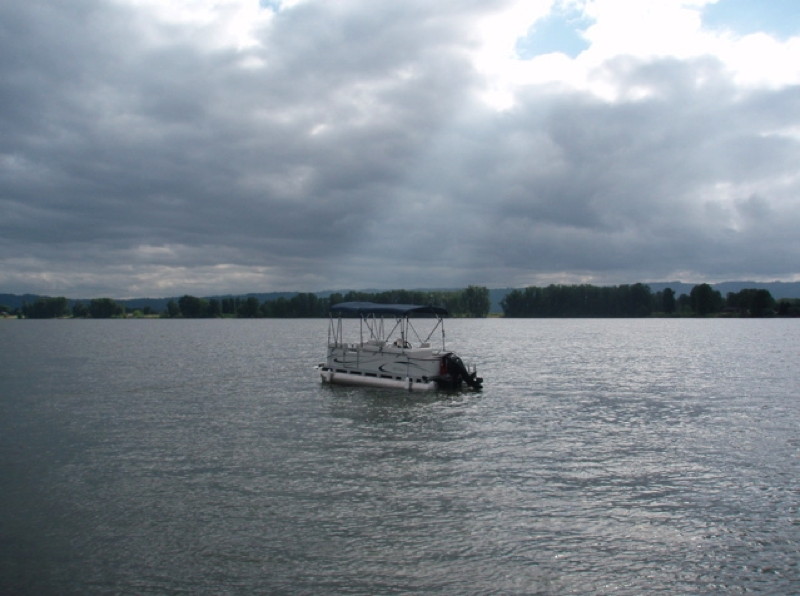
And here is a video of a potentially dangerous situation, a tug creates a large wake that could damage my little pontoon boat. But because I have it on an Anchor Buddy she safely rides out the wakes with no damage at all.
When you want the boat back (like to retrieve a beer from the cooler or something) just pull on the line going to the boat. The Anchor Buddy will resist, but the boat will come in. Once you have your beer or whatever, let go and the boat will take off again out to deep water, like this!
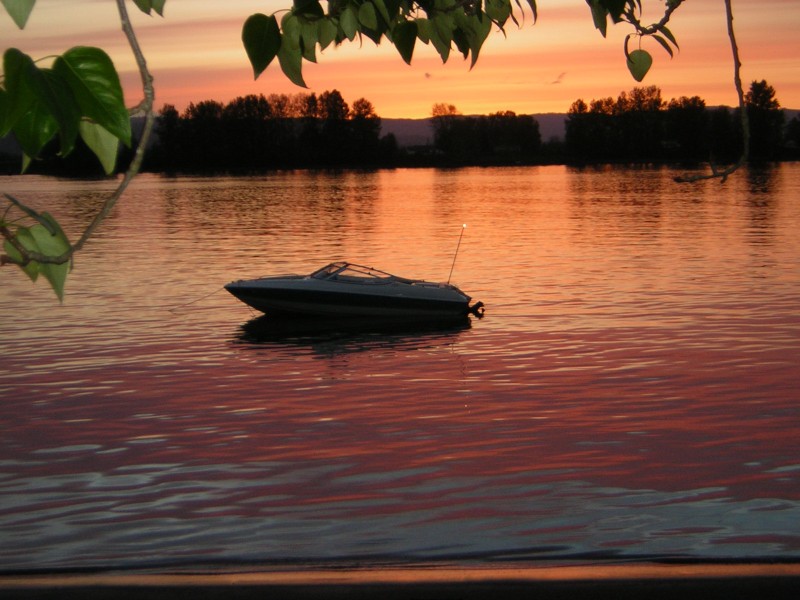
Here's a puzzler. In this sunset picture you can see my pontoon boat Lil' Ambition floating happily out in deep water where the evil ship wakes can't hurt her thanks to my Anchor Buddy. But the wind is blowing from the West-Northwest, which should push her right into shore. Why isn't she washed up on the beach?
Here's the answer. Like normal I have Lil' Ambition anchored on the upstream (left) side on a double Anchor Buddy. Because I only have the back side-covers up on the boat, the wind tends to push the stern toward the shore, but the anchor and Anchor Buddy tend to pull the bow out into the river. With the current flowing left to right, it makes the keels of Lil' Ambition work like a kite, so the current is acting like wind against a wing to push the boat back out into the river, away from shore.
Another great thing about using the Anchor Buddy, is that when it's time to leave, either for a quick waterskiing trip, or to go home for the day, the Anchor Buddy pulls you and your boat out into deep water so you don't get beached as you get the boat ready to go.
When I am just going out for a short buzz, I pull the boat in, jump in, and let the Anchor Buddy pull me out. Then I lower the outdrive, fire up the engine, and then uncleat the rope from the bow cleat. Since I use Nylon line, it sinks so the chance of sucking up the rope in the prop is lessened.
When it's time to go home, I unscrew my helix anchor, pull the boat to shore, jump in and as the Anchor Buddy is sucking me out into deep water, I pull in the part of the rope that was going to shore so the water can clean the sand off it before I stow it in the anchor locker. Then I lower the outdrive, fire up the engine and then retrive the anchor.
The only problems I have had with this system are:
Sometimes I don't pay attention to the rope going out as I come in to shore and the rope or Anchor Buddy gets eaten by the prop.
I drop the anchor too far out, and then I don't have a lot of line I can pull in so the boat ends up too close to shore. The cure for that is to go back out and move the anchor in some.
The elastic element in the Anchor Buddy will age and break after a while, especially in low temperatures. But because it's just rubber surgical tubing, repairing or replacing the stretchy part is easy! Buy some rubber surgical tubing at the local hardware store and when yours breaks, use a fid to restring the new tubing. You'll need two pairs of pliers or Vise-Grips to open up the stainless steel rings that hold the tubing in place.
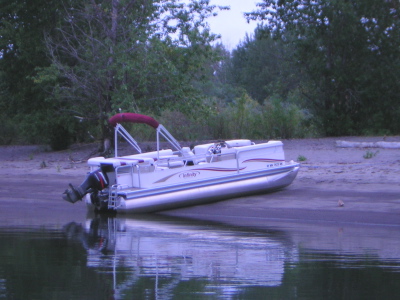
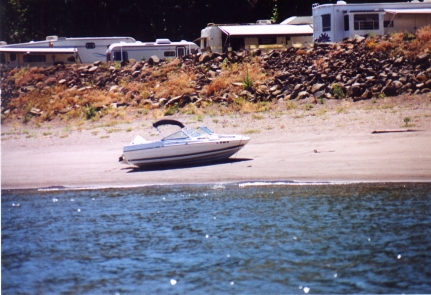
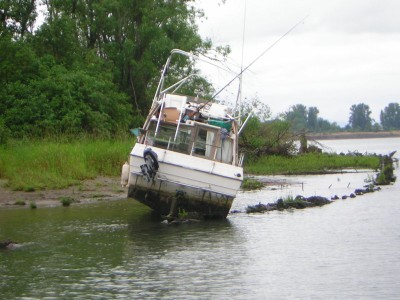
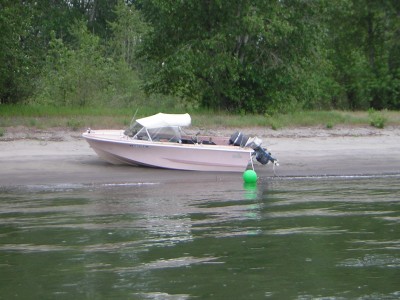
One last thing, if you don't buy an Anchor Buddy, thank you. Every weekend I have so much fun watching people who just beach their boats, and then see them scramble like maniacs when a big ship wake washes their boat up on shore and fills it with sand and water. Or sometimes I get to watch campers wake up in the morning and realize that the tide went out and now two people have to try to move a 3000 pound boat over 10 feet of dry sand before they can leave.